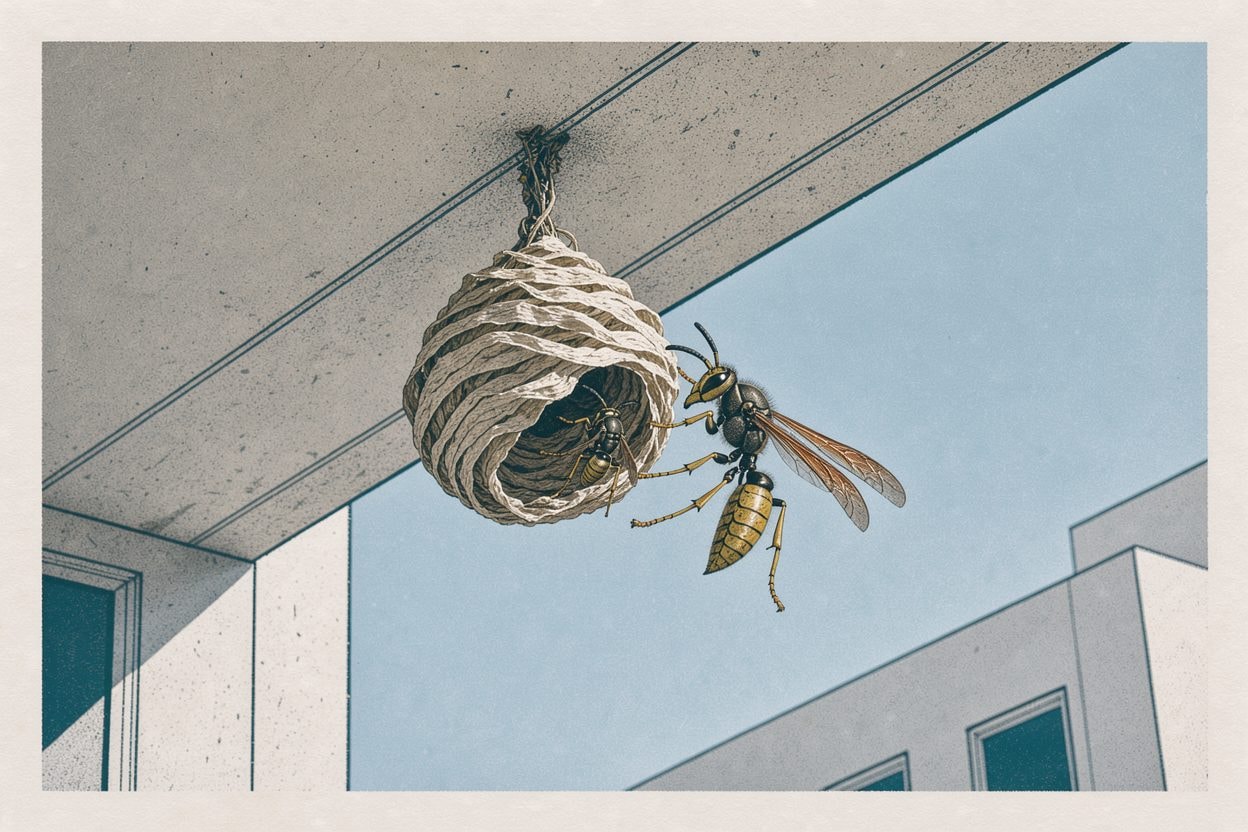
A visitor or a nest?
A wasp on fruit or a flower may be foraging. Several insects flying in and out of the same roof joint, overhang or cavity suggest a nest nearby. A nest may be exposed or concealed. Do not climb up or put a hand into a gap to find out.
The name hornet can also refer to other kinds of wasp. A professional can distinguish social wasps, solitary wasps and bees. The distinction matters for a safe response and for animals that pollinate plants or feed on other insects.
Make room around the flight path
Keep children and pets clear. Where the opening is close to a communal doorway, notify the person who manages access. Give the direction of flight and the time of day you observed it. Leave an occupied entrance open for professional assessment. Blocking a wall opening can send insects in another direction.
Avoid knocking down a nest, spraying into an unknown cavity or using fire. When someone has breathing difficulty or another severe reaction after a sting, seek emergency medical help. Discuss other concerns about a sting with a clinician.
What to ask a specialist
- Identification
- Which insect is present? Has the nest itself been located, or is the observation limited to the entrance?
- Use of the space
- Is a route used by residents or staff affected? Could the area be given distance while the nest remains?
- Afterwards
- If work is necessary, ask how access will be managed and when an empty opening can be repaired.
Between visits
Cover food and drinks outdoors and keep waste containers closed. Record any change in the route from a safe position. Once a professional confirms a cavity is clear, building maintenance can consider a lasting repair.