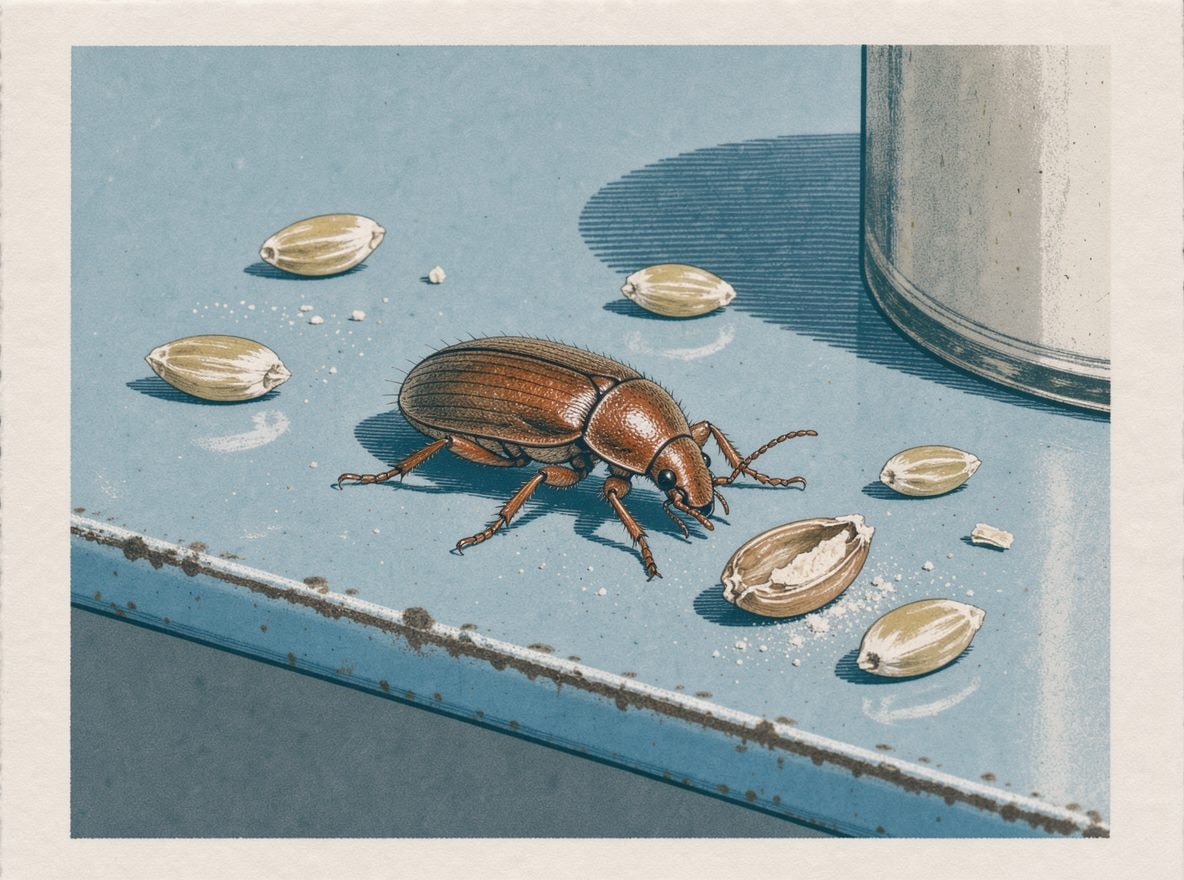
Start with the material beside it
A pantry beetle may arrive inside dry goods. Check flour, cereals, pulses, spices, dried pet food and packets that have sat unopened for a long time. Look for small insects inside a packet, holes in packaging or dust collecting on the shelf. Isolate visibly affected goods and inspect what was stored next to them.
In a textile cupboard, look instead for shed skins, hairy larvae and damage to wool, silk or feathers. Adult carpet beetles can appear at windows. The feeding stage that damages susceptible fabrics is the larva.
Narrow the search
- In the pantry
- Work one shelf at a time. Empty the shelf, check packet seams and clear spilled food out of the joints. Store sound food in closed containers.
- Among textiles
- Follow cleaning instructions for each item. Check quiet edges under rugs, folded material and places where lint has collected.
- Inside timber
- Photograph holes and loose material in place. Wood damage deserves a separate assessment. A nearby beetle may be incidental.
Before choosing a service
Ask which type of beetle the company thinks it has found and which evidence supports that identification. Bring a photograph of the damaged material as well as one of the insect. Ask whether a change to food storage, removal of a source or treatment of a specific material is proposed.
In a shop or warehouse, record the affected packet or delivery and inspect neighbouring stock. A follow-up can then distinguish a missed source from a new arrival. Keep cleaning and treatment products away from food, and let the inspector explain any product-specific precautions.